IL Truck Freight Services
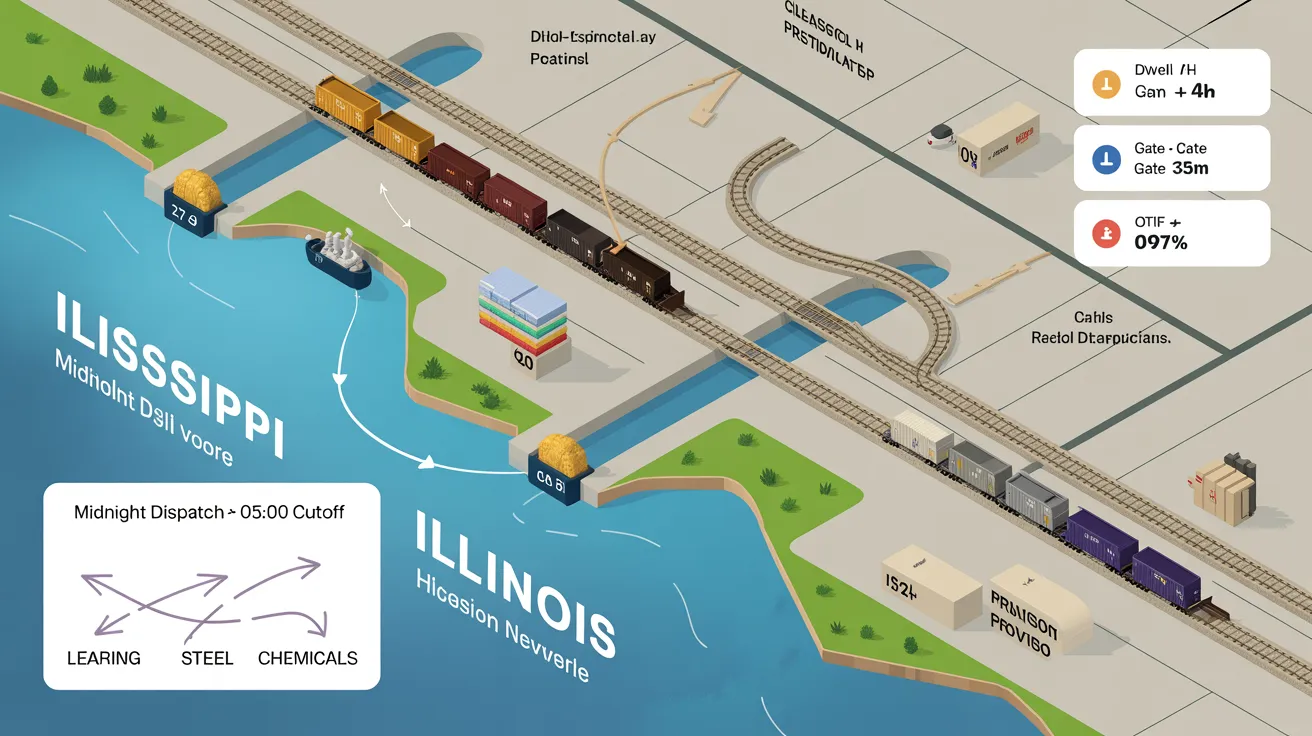
You coordinate Illinois commodities with precision: coordinate barge ETAs at Locks 27 and 19 to rail windows at Clearing and Proviso, initiate departures at midnight to hit 05:00 cutoffs, and hold intermodal dwell under four hours with gate turns under 35 minutes. Synchronize ACE, waybills, and ELD processes. Streamline transport of grain shuttles, ethanol tanks, steel flats, and hazmat chemicals via real‑time tracking, predictive routing, and capacity locks. Lower cost‑to‑serve while enhancing OTIF, minimizing detention, and lowering carbon-we have a proven playbook ready.
Key Points
- Integrated transport options for Illinois commodities via rail, barge, and truck networks, synchronized to shipping terminals, rail yards, and door-to-door delivery service agreements.
- Transportation of grain, ethanol, steel, and chemicals with compliance standards for each mode: hazmat identification, temperature monitoring, coil protection, and denaturant validation.
- Live monitoring with smart monitoring systems monitoring transit metrics and anomalies and sending early warnings to maintain on-time performance and process efficiency.
- Smart routing and automated tendering enhance routes around congestion and weather, combining shipments and reducing demurrage and interchange friction.
- Capacity maintained through rolling commitments, overnight operations, and cross‑trained labor; environmental performance monitored via performance analytics and quarterly Scope 1-3 documentation.
Multimodal Networks Driving Illinois Supply Chains
Connecting river barges, rail spurs, and last‑mile trucks, Illinois' integrated transport system connects shipping methods with speed and resilience. You plan loads by matching barge ETAs at Locks 27 and 19 with rail windows at Clearing and Proviso, then assign drayage to meet delivery SLAs. You target dwell targets under four hours at intermodal yards and maintain gate turn-times below 35 minutes.
You utilize midnight dispatching to relocate resources, reduce pending loads, and achieve 05:00 cutoffs. For cross border coordination, you synchronize ACE filings, rail waybill releases, and copyright ELD cycles to eliminate detention. You track KPIs: on‑time performance above 97%, damage rate under 0.2%, and per‑mile cost by mode. With real‑time visibility, you navigate through traffic and weather conditions without failing to meet commitments.
Key Commodities: From Raw Materials to Industrial Products
Matching commodity flows to mode-specific strengths, you prioritize Illinois' core moves: grain commodities to waterway facilities and rail units; renewable fuels using manifest shipments and designated tanker groups; steel materials transported via specialized rail equipment; and bulk/bagged chemicals in tank cars and hazmat‑compliant trailers. You configure consists to comply with axle limits, coordinate around harvest peaks, and manage backhauls. For grain, you utilize commodity pooling to attain shuttle volumes, regulate moisture specs, and coordinate barge ETAs with lock windows. For ethanol, you confirm denaturant ratios, monitor tank turn times, and verify export controls at port transloads. Steel shipments require coil weight distribution plans, dunnage standards, and securement audits. Chemicals require UN identification, placarding, temperature controls, and copyright vetting, decreasing dwell, demurrage, and detention.
Technical Infrastructure: Visibility, Tracking, and Performance Optimization
Such conventional strategies only deliver results at scale when you monitor every action. You set up sensors, APIs, and control towers to measure route-specific timing, delays, temperature levels, and container security. With Real time Tracking, you monitor equipment whereabouts, delivery confidence levels, and warning signals, then activate alerts before performance indicators slip. You normalize events (depart, arrive, loaded, released) and match them against shipping documents, billing records, and inventory status.
Following this, you employ Predictive Routing to assess paths by congestion risk, weather effects, and delivery dependability. The models re-optimize stops, combine tenders, and harmonize cube, weight, and HOS restrictions. You analyze plan-versus-actual, measure cost-to-serve, and input outcomes back to optimize parameters. You generate dashboards for OTIF, dwell variance, detention exposure, and carbon intensity, producing continuous operational enhancements.
Strategic Infrastructure: Multi-Modal Transportation Systems
As digital control towers advance, you ultimately compete on physical assets and port capacity-so you assess Illinois's multimodal backbone by volume, consistency, and connection points. You evaluate rail by train length, axle loads, and access to industrial sidings; you prioritize yards with optimal handling and multiple railroad connections. Along waterborne routes, you rate terminals by vessel turnaround, handling speed, water depth, and lock efficiency along the Illinois and Mississippi corridors. For roads, you model highway capacity, traffic flow, access points, and permit processing time to ensure cycle integrity. In the air domain, you value an airport cargoplex with around-the-clock operations, large aircraft capacity, and efficient intermodal connections. You optimize nodes to minimize handoffs and demurrage.
Managing Market Demands: Strategic Approaches to Capacity, Labor, and Sustainability
While demand fluctuations and compliance requirements grow, you can secure consistent margins by managing capacity, labor, and sustainability as a unified framework. Start by focusing on capacity: evaluate lane-level demand on a weekly basis, then establish rolling commitments with railroads, barge lines, and carriers. Implement dynamic tender routing and reserve surge assets to maintain 95% on-time performance. here For staffing efficiency, develop a workforce development pipeline: enhance versatility of operators on intermodal, train mechanics on EV and CNG, and align shift bids with forecasted throughput. Measure safety, productivity, and retention across locations.
Regarding sustainability, prioritize green upgrades based on ROI metrics: initially focus on LED retrofits and VFD enhancements, followed by electric yard tractor conversion and solar panel installations. Deploy telematics systems to track equipment idling, load efficiency, and environmental impact. Monitor and report Scope 1-3 emissions each quarter, tying rewards to decreased emission intensity.
Frequently Asked Questions
What Insurance Coverage Is Standard for Illinois Commodity Shipments?
You'll typically need to obtain insurance coverage and confirm copyright liability limits in accordance with Illinois and federal requirements. Start with determining the commodity type, value, and NMFC class. Confirm the transporter's Carmack liability (typically $0.50-$25/lb) and add additional cargo coverage covering full invoice value. Note cargo condition during transit, implement seals, and document the cargo. Request proof of coverage, named insured designation, and rights of subrogation waiver. Keep track of claims timelines: 9 months for filing and 2 years for litigation.
What Are the Qualification Requirements for Transport Incentives
Qualification requires meeting program criteria, staying within income thresholds (which typically cap at 250% of state median), and filing complete documentation within required application timelines. Start by completing eligibility screening, assemble cost data, emissions baselines, and safety records, then register in SAM.gov and your state portal. Submit the application, append quotes, certifications, and past performance. Follow scoring rubrics, handle clarification requests within 3-5 business days, and, if awarded, satisfy reporting milestones to retain incentives.
A Guide to Storage and Hold Costs for Illinois
Regular detention charges vary from $50-$150 per hour after the first 1-2 hours, while freight contracts usually cap fees at $500-$1,000 daily. Railway detention fees typically run $75-$150 per car per day after 24-48 hours of free time, and ocean terminals impose fees of $150-$350 per container per day, with tiered rate increases. Yard storage expenses generally run $25-$75 per day after an initial 2-5 day window. You can minimize these costs by documenting key timeframes, handling documentation early, scheduling precise loading times, and tracking deadlines via TMS.
How Are Hazardous Materials Permits Handled Across Illinois Jurisdictions
Handling hazardous materials permits requires matching state requirements with local ordinances, then executing permit processing across agencies. You should anticipate jurisdictional requirements: IDOT handles base hazmat endorsements, but municipalities may specify route approvals, time restrictions, convoy support, or fire department notifications. It's essential to confirm material classification, amounts, warning signs, and vehicle details, then submit applications with SDS, liability documentation, and driver certifications. Monitor expiration dates, fees, and route limitations, and document emergency responders and incident emergency protocols ahead of transport.
Understanding Peak-Season Surcharge Patterns in Illinois Corridors
Peak-season surcharge patterns for Illinois corridors spike significantly in Q4 and mid-summer, resulting from seasonal surcharges and capacity constraints that feel bigger than the sky. You'll see 8-15% lane premiums Chicago-St. Louis and 10-20% Chicago-Quad Cities, spiking around harvests and retail pushes. Navigate these challenges by planning 6-8 weeks out, locking mini-bids, adjusting mode (dry van to intermodal), and positioning drop trailers. Track tender rejection rates and DAT spot-to-contract deltas every week.
To Conclude
You stand at the core of Illinois's transportation network-trains moving, vessels navigating waterways, freight carriers crossing roads, aviation handling priority shipments. You transform analytics into action: sensor pings, boundary warnings, delivery schedule changes, and stopover minimizations. You synchronize commodities, energy products, industrial goods, and chemical products with resource allocation, workforce, and environmental goals. You connect pathways, connections, and service levels into a robust system, continuously improving. In every monitoring screen, you track progress-analyzed, confirmed, and building into market leadership.